
Last updated November 17, 2026
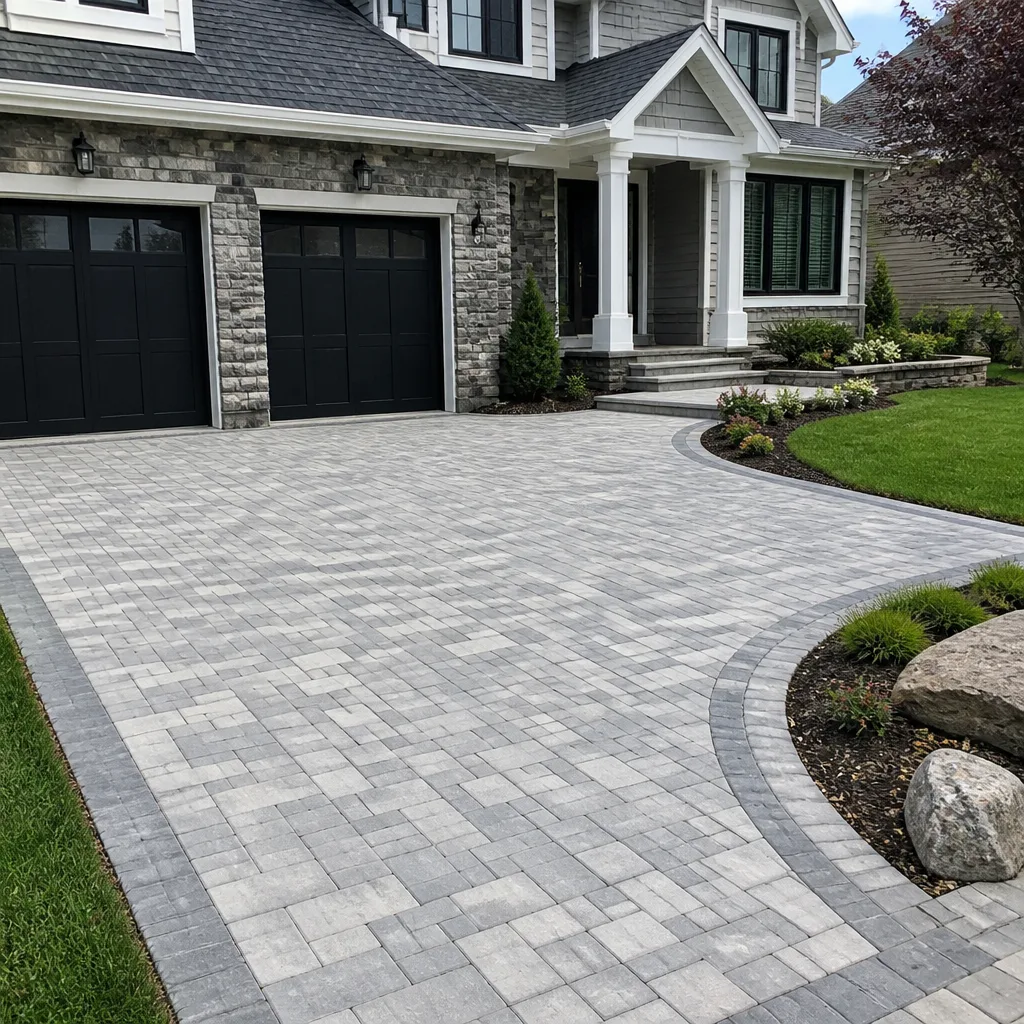 Driveway & pavers
 Kitchen remodeling
 Bathroom remodeling
 Home additions & ADU
 Roofing
 Windows & doors
 Fence
Free written scope consultation - allowances, timeline, and change-order rules on paper before a single trade is scheduled
Driveway & Pavers Troubleshooting in Westchester: Common Problems and How to Fix Them
The crack you can see is rarely the problem you need to fix. In Westchester, FL, a driveway that heaves, sinks, or sprouts weeds between pavers is usually reporting a failure that started underneath it – in the base, the drainage, or the installation itself. Filling that sunken section with fresh sand without correcting the runoff that caused it means you’ll be doing the same job again after the rainy season, and the second repair costs more than the first. This guide breaks down the most common driveway and paver failures we see around Westchester, shows you how to tell a base problem from a drainage problem from a poor install, and explains what the actual fix looks like for each. By the end you’ll know what to check, what to ask a contractor, and when a repair is worth doing versus when you’re just delaying a replacement.
Quick Answer
Most driveway and paver problems in Westchester come down to one of three root causes: a base that wasn’t compacted or drained properly, water pooling from irrigation runoff or poor grading, or tree roots lifting sections from below. Cracked and settled pavers on a sound base can often be releveled and re-sanded without replacing the whole driveway, while widespread rocking, heaving, and repeated joint-sand loss usually point to a base failure that requires rebuilding the affected area. The correct fix always follows the diagnosis – not the other way around.
Styles & brands we work with
- Kitchen remodeling
- Bathroom remodeling
- Home additions & ADU
- Roofing
- Windows & doors
- Driveway & pavers
- Fence
Table of Contents
- How do you diagnose a driveway or paver problem? Three root causes
- Why pavers pop up and rock in Westchester: tree roots, irrigation, and rainfall
- Can you relevel a sunken paver section without replacing the whole driveway?
- What causes white mineral deposits and staining on pavers in Florida humidity?
- Why does joint sand fail and weeds take over the joints?
- What causes cracks in concrete driveways, and when is crack repair a waste of money?
- What products and brands should you specify for a Westchester driveway?
- Common mistakes to avoid
- When to call a professional
How do you diagnose a driveway or paver problem? Three root causes
Every driveway symptom – a crack, a dip, a rocking paver, a weed – traces back to one of three root causes. Getting the diagnosis right before you spend money is the single most important step in this whole process, because the fix for one cause will not solve another.
1. Settling / base problem
Settling happens when the compacted gravel base under the surface loses its integrity. You see it as low spots, a driveway section that dips toward the house or the street, or pavers that feel spongy underfoot. On a proper install, the base is graded and compacted in lifts so it carries the load evenly. When that’s skipped or done in too few passes, the surface slowly moves. The fix involves lifting the pavers, checking and rebuilding the base in the affected area, recompacting in thin lifts, and resetting the surface. A single low spot is a repair; a pattern of dips across the whole driveway usually signals a base that needs a broader rebuild.
2. Drainage problem
A drainage problem shows up as pooling water that lingers hours after rain, staining that runs in one direction, or a paver area that stays visually darker than the rest. In Westchester, this comes from three places: the slope of the driveway running toward the house instead of away from it, a sprinkler head aimed at the pavers dumping water onto the surface, and downspouts that discharge right next to the driveway edge. Fixing drainage might mean releveling a small area, redirecting a downspout, adjusting irrigation heads, or adding a swale. If the water is coming from a source above, no amount of releveling will fix it.
3. Poor installation problem
Poor installation is the hardest to spot early because it looks fine in the dry season. Signs include pavers that were laid without adequate compaction, edge restraints that weren’t set into a concrete footing, and joint sand that’s already washing out in the first year. When install problems combine with settling, the entire affected area needs to come up – not because the pavers are bad, but because what’s under them was never right to begin with. The good news: pavers themselves are reusable. The material cost of a rebuild is often lower than homeowners expect.
Why pavers pop up and rock in Westchester: tree roots, irrigation, and rainfall
Pavers in Westchester deal with a specific combination of forces that push and pull on them all year. Two causes dominate: tree root intrusion from species common to South Florida landscaping, and base erosion from irrigation runoff during the rainy season.
Tree root intrusion
Ficus, oak, and palm roots are aggressive, and they travel toward water and toward shallow, warm soil. When a tree sits within root-spread distance of your driveway, its roots can lift paver sections from underneath – the surface heaves in an arc, a paver pops up a quarter inch, and you get a rocking corner. In our experience, the arc pattern is the giveaway: roots lift from one side and the pavers tilt away from the tree. You cannot fix this by tamping the pavers back down. The affected pavers need to come up, the root has to be cut and the cut sealed (a job for a tree professional, not a paver crew), and the base under that section has to be recompacted before the pavers go back down.
Irrigation runoff
Sprinklers that overshoot the plant bed and spray the driveway every morning erode joint sand and saturate the base edges. Over time, the base loses fines and the pavers start to rock. This is why a paver driveway that held fine for years suddenly needs work right after landscaping changes or a new irrigation schedule. Sometimes the fix is as simple as redirecting two heads. Sometimes the base near the edge needs rebuilding. In either case, fixing the irrigation first prevents the same failure from returning.
Rainfall and heat
South Florida’s rainy season puts serious water volume through the joints. A driveway that drains well handles it. One with a low center or a joint-sand specification that isn’t suited to heavy rain doesn’t – and you get the same erosion cycle. That’s why the right joint sand for this climate matters as much as the pavers themselves.
Can you relevel a sunken paver section without replacing the whole driveway?
Yes, in many cases. A single sunken section of a driveway in Westchester can usually be releveled and re-sanded without touching the rest if the base underneath that section is intact and the surrounding pavers are stable. What makes the repair legitimate versus a band-aid is whether the root cause has been addressed.
A viable relevel vs. a band-aid
A relevel is viable when the dip is localized, the drainage under and around it has been corrected, and the base is judged sound after the pavers come up. A band-aid is when the pavers get pulled, sanded, and tapped back down over a base that’s still washing or a root that’s still growing. The paver moves again within a season. To get the diagnosis right the process generally follows this sequence:
- Mark the affected area and identify the dip and any secondary dips a few feet away.
- Pull the pavers and set them aside – they’re reusable, so they go back down in the same pattern.
- Expose the base and check compaction, moisture, and the presence of roots or voids.
- Correct the root cause: cut and seal roots through a tree professional, redirect runoff, or repair the base.
- Rebuild the base in thin, compacted lifts, check slope, and reset the pavers to grade.
- Reinstall edge restraints if they were compromised.
- Re-sand with a polymeric or stabilized sand specified for high rainfall, and recompact the joints.
If the dip is small and the rest of the driveway is stable, this is a very reasonable repair. If the pavers rock across a broad area, that’s a base problem and releveling a section won’t last. That’s the distinction we use when advising homeowners on driveway & pavers work – diagnose the whole driveway, fix the section that’s failing, and leave the sound areas alone.
What about concrete driveways?
Concrete cracks can often be filled and sealed, but a sunken concrete slab usually needs either slab jacking (mudjacking) or full replacement. Concrete is more brittle than pavers, and a slab that has settled unevenly can’t be releveled back to grade without lifting. Ask how a contractor plans to handle the base under the slab, not just the surface crack. The paver approach offers a big advantage here: if a future failure happens, you pull the affected pavers, and the driveway returns to a uniform look.
What causes white mineral deposits and staining on pavers in Florida humidity?
Efflorescence – the white, chalky haze that appears on concrete pavers – is a natural process where soluble salts migrate to the surface as moisture moves through the material and evaporates. In Florida humidity, it’s more common because pavers dry slowly, giving salts more time to reach the surface.
Is it a defect?
No. Efflorescence isn’t damage and doesn’t shorten the life of the paver. It’s a cosmetic condition that usually resolves on its own over time as the paver fully cures and the salt reserve depletes. Aggressive removal – pressure washing at high PSI or acid washing without understanding the material – can damage the paver face and make the problem worse. The right approach starts with the mildest option and escalates only if needed.
How to treat efflorescence without damaging the surface
- Start with a dry brush. Many light cases come off with a stiff brush once the paver is fully dry.
- If that doesn’t work, use a paver-safe efflorescence remover diluted per the manufacturer’s label. Never mix acids with anything else.
- Rinse thoroughly and let the paver dry completely before judging the result. Some efflorescence needs to be treated more than once.
- Seal only after the efflorescence is fully gone and the paver has dried out. Sealing too early traps moisture and can drive more salts to the surface.
Other stains worth knowing
Not every stain is efflorescence. Rust stains come from irrigation water or metal furniture sitting on the surface. Organic stains from leaf tannins are common in Westchester yards where oaks and palms drop heavily. Oil stains need a poultice, not just a scrub. Treating a stain with the wrong product can set it permanently – so if you’re unsure what it is, ask before you start rubbing things into the paver.
Why does joint sand fail and weeds take over the joints?
Joint sand loss is the single most common paver complaint after the first rainy season. Standard sand washes out; weeds root in the joint; the pavers start to rock because they’ve lost the interlocking friction that keeps the surface tight. In Westchester’s rainfall pattern, the specification matters more than it does in drier parts of the country.
Why polymeric sand fails in high-rainfall zones
Polymeric sand is a mix of sand and a binder that hardens when wetted. It works well when it’s installed correctly: swept completely into a dry joint, compacted onto the pavers, activated with the right amount of water, and left alone until cured. When that sequence is rushed or done wrong, the binder sets on the surface or doesn’t fully cure in the joint – and the first heavy rain carries it away. The most common installation errors are:
- Filling joints that are too deep or too wide for the sand being used.
- Sweeping sand into joints while they’re still wet, which prevents the binder from setting.
- Overwatering during activation, which washes the sand out of the joint.
- Applying poly sand in humid weather when the paver is damp and never letting it dry.
- Not recompacting the pavers after settling and before re-sanding.
What the right product specification looks like for Westchester
For a high-rainfall climate, specify a stabilized joint sand rated for heavy rain – some manufacturers make polymeric sand with a wider joint tolerance and a stronger binder. Look for a product whose manufacturer specifies its use in wet climates and confirms a minimum joint depth and paver surface condition. Ask the installer for the product name and spec sheet, not just “polymeric sand.” That single question tells you whether they know what they’re installing or picking up the cheapest bag at the supply house.
What causes cracks in concrete driveways, and when is crack repair a waste of money?
Cracks in a concrete driveway in Westchester most often come from drying and shrinkage during curing, from a base that settled unevenly, or from tree roots lifting one side of the slab. Where the crack originates tells you whether the repair is worth doing.
Crack types and what each means
- Hairline shrinkage cracks: thin, tight, usually cosmetic. Fill and seal to keep water out, and they should hold.
- Structural cracks: wider than a pencil, or with one side higher than the other. That’s a base or root problem, not a cosmetic one. Filling over it without addressing the cause is a waste of money.
- Cracks along a joint line: often normal at control joints. Cracks that appear away from any joint are more likely to indicate base movement.
- Spiderweb or map cracking: multiple cracks radiating from a point. Usually points to a subgrade issue or, in older drives, aggregate reaction. These often signal replacement rather than repair.
When to repair vs. replace
On a driveway with isolated cracks on stable slabs, crack repair and sealing can extend life significantly at reasonable cost. On a driveway with multiple structural cracks, an uneven surface, and rock beneath the slab, repairs tend to fail because the water keeps getting back into the base. Concrete sealers help slow deterioration but don’t fix a compromised base. If the surface is the problem, a resurfacing overlay can work – if the base is checked first. If the base is failing, replacement is the durable answer. That’s a conversation worth having honestly, and one of the reasons we don’t recommend resurfacing before the base is evaluated.
What products and brands should you specify for a Westchester driveway?
Brand choice for a driveway comes down to the material system and the product line – not just the color of the pavers. The pavers, the joint sand, the edge restraint, the sealant, and the base materials all need to work together. Specify the whole system.
Pavers
For architectural pavers, we work with Belgard, Techo-Bloc, and Unilock – each has product lines suited to the wet-season and heat demands of Westchester driveways. Specifying a manufacturer’s system – pavers plus their published joint sand and edge restraint – means the products are tested together.
Concrete and repair products
For concrete repair and small slab work, brands like Quikrete and Sakrete provide dependable base materials and repair mixes for the prep work. The right mix is a function of the application: patching, base repair, or new pour.
What to ask any contractor
- Which manufacturer’s paver line, and why that one for this driveway?
- What joint sand specification are you using, and is it rated for a high-rainfall climate?
- Are edge restraints set in a concrete footing, or just spiked to grade?
- How deep is the compacted base, and how many compaction passes?
- What brand of sealant, and is it breathable or film-forming?
The truth is that most Westchester driveways fail on installation, not brand. A top-tier paver over a poorly compacted base performs worse than a value-tier paver over a properly built one. What brands give you is consistent quality and a known spec sheet – not a substitute for the labor underneath. If a contractor can’t speak to the spec sheet, no brand name on the paver saves the job.
Common Mistakes to Avoid
- Fixing the symptom before the cause. Filling a sunken paver section without addressing drainage or roots means it settles again after the next rainy season – and the second repair is more expensive than a correct first one.
- Skipping the base check. Every paver repair begins with pulling pavers and inspecting what’s underneath. Any repair that doesn’t touch the base on a driveway with known settling is a temporary fix.
- Overspraying the irrigation. Westchester landscapes need water, but sprinkler heads aimed at the driveway wash out joint sand all season. Adjusting heads is cheaper than repairing the damage they cause.
- Pressure washing at high PSI. On a paver driveway, high pressure strips joint sand and roughens the paver face. Use a wide nozzle at low pressure, and re-sand any joints that empty.
- Sealing too early or too often. Sealing a new install before the paver cures, or sealing over moisture, traps water and creates a milky haze. Wait for a fully dry paver and a clean surface.
- Choosing pavers by color only. Thickness, compressive strength, and joint tolerance are what keep the driveway stable. Color is the last decision, not the first.
- Letting a root problem grow. A small lift becomes a cracked, rocking section, and in some cases a lifted hazard with a trip edge. Deal with tree roots before they reach the surface.
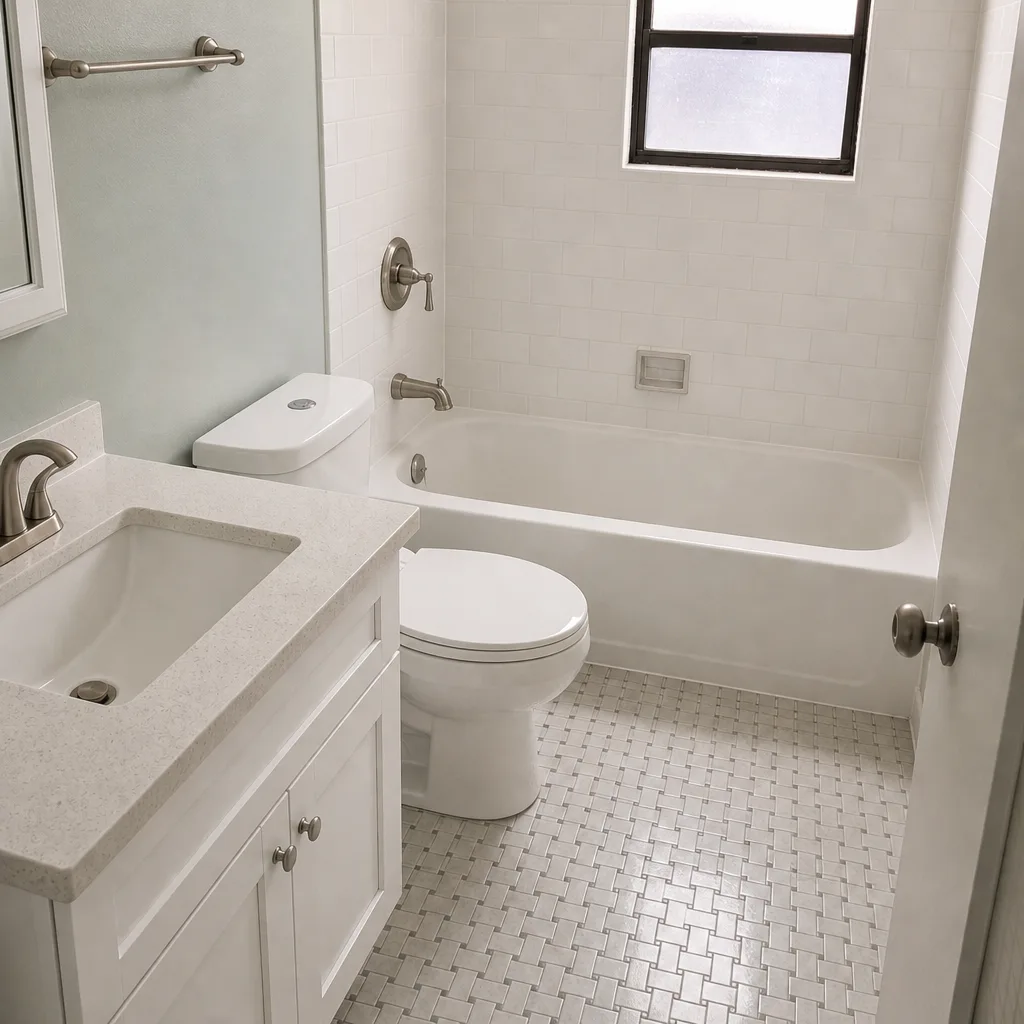
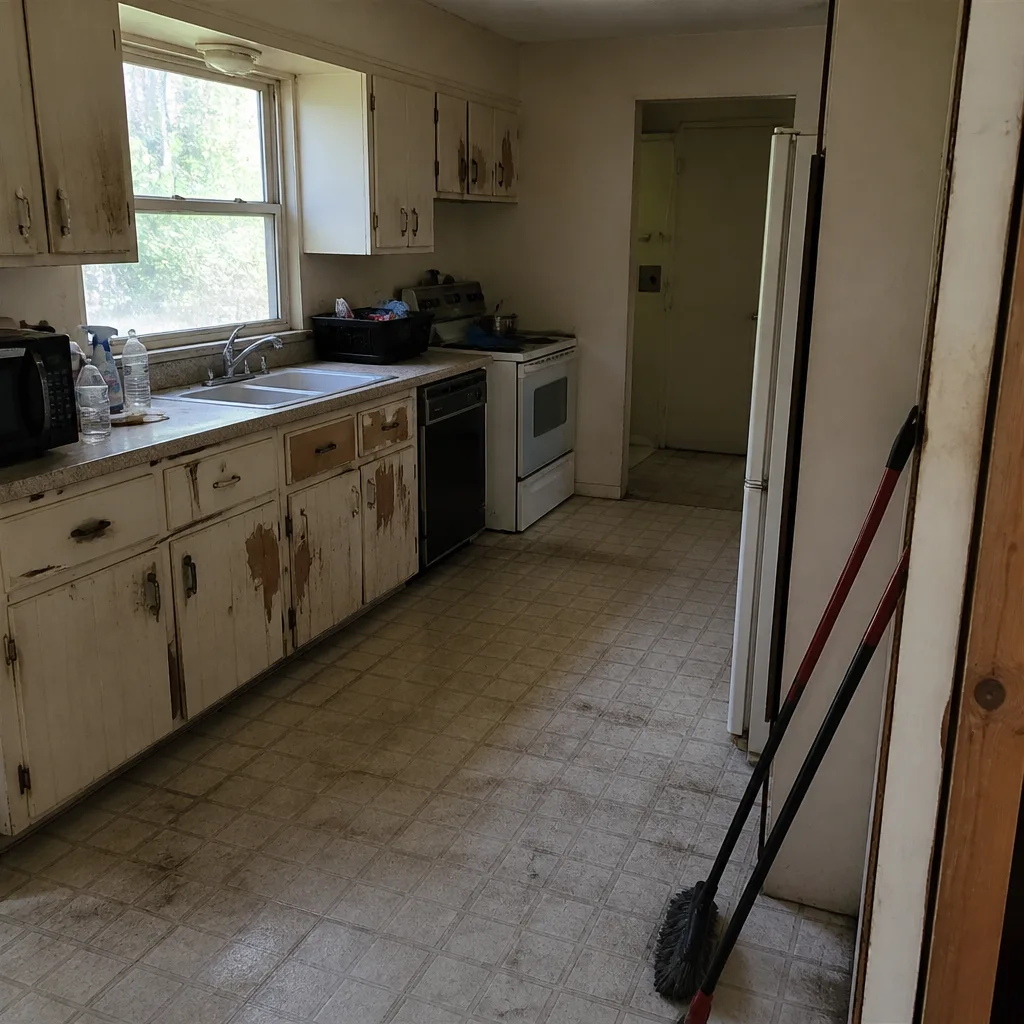
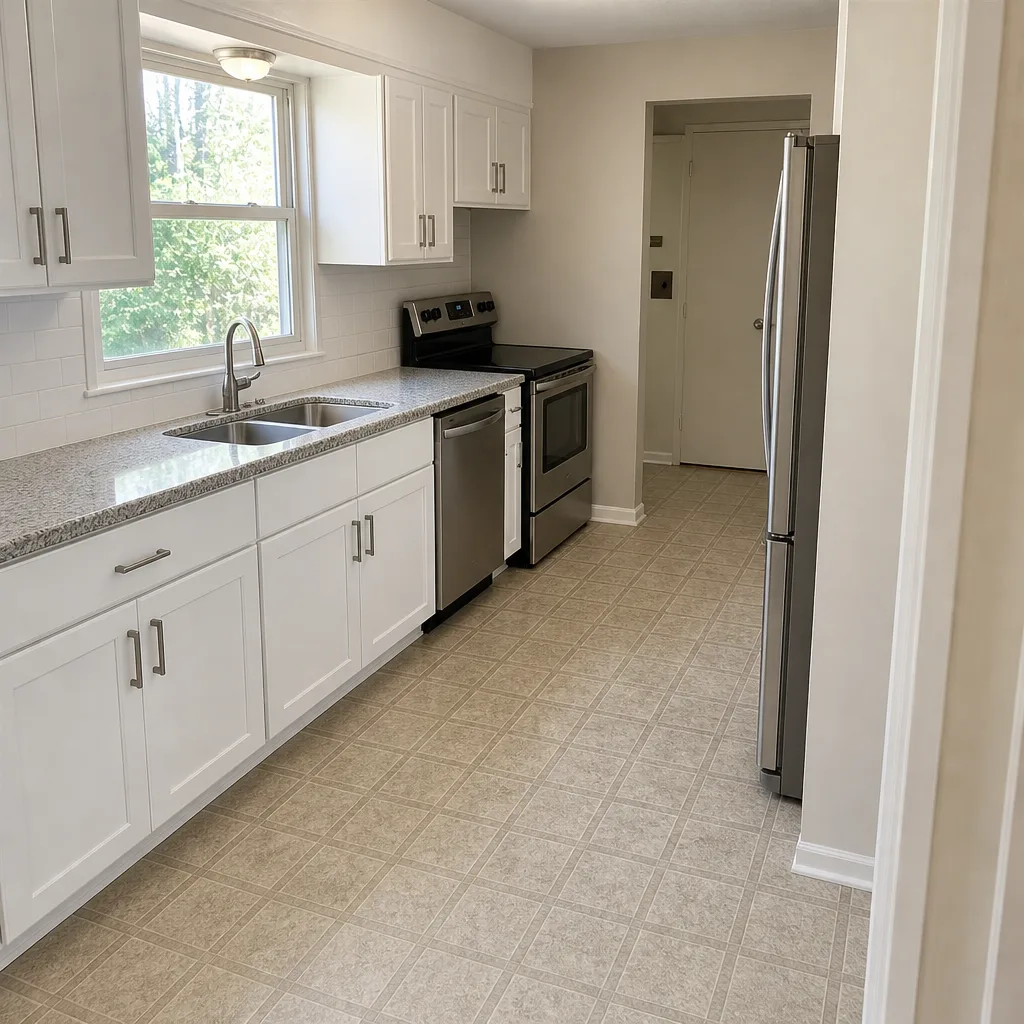
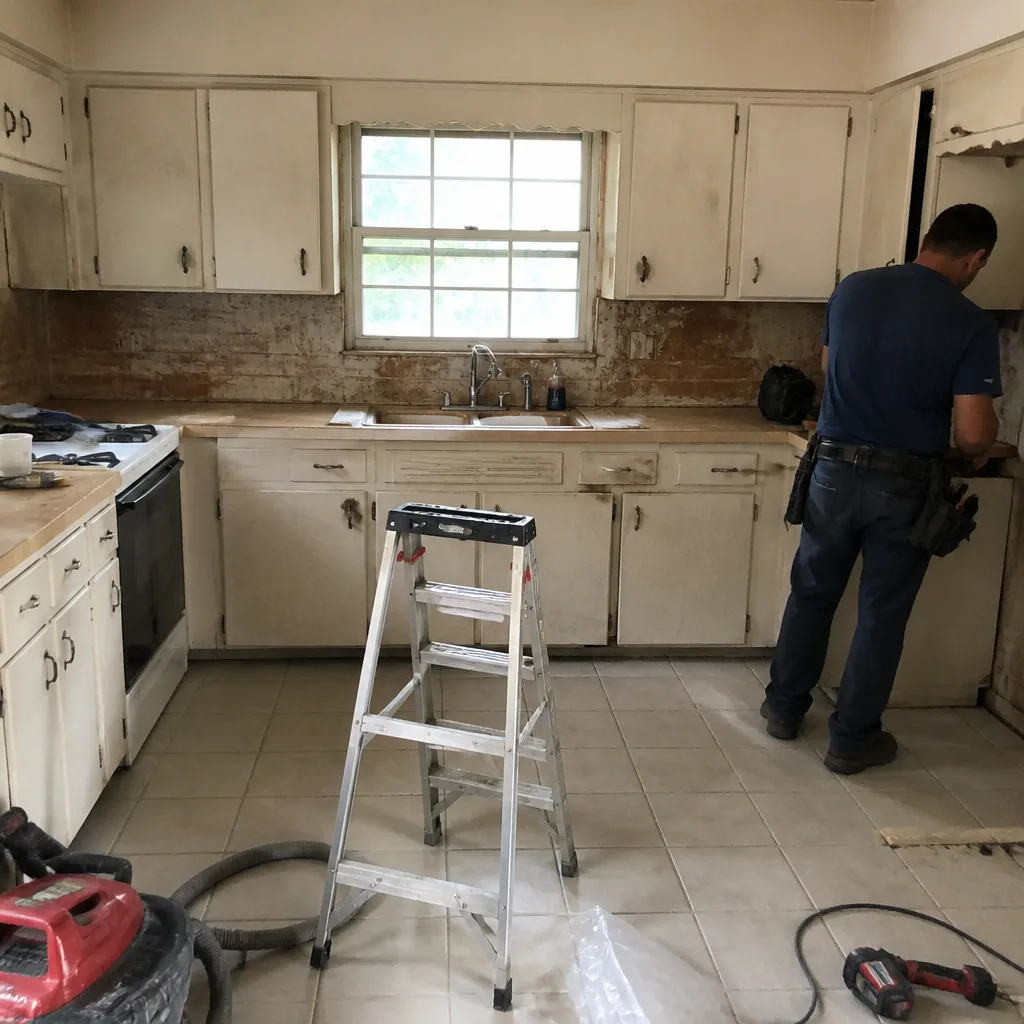
See the difference
 Before
 After
 Before
 After
 Before
 After
When to Call a Professional
Some driveway repairs are straightforward DIY fixes – sweeping sand into empty joints, adjusting a sprinkler head, brushing light efflorescence. Others need real diagnosis and heavy work: pavers rocking across a section, a dip that returns after a repair, water pooling toward the house, tree roots lifting the surface, or a concrete slab with structural cracks. Those are the jobs where guessing gets expensive, because the wrong fix doubles the cost. When the base is in question, the surface has to come up – and that’s a job requiring compaction equipment, correct base materials, and a system specified for Westchester’s rain and heat. That’s the kind of work we do as part of a broader exterior scope, and it’s one we’re happy to scope alongside projects like fence installation or a whole-property exterior plan so the drainage and grading line up instead of getting fixed twice. Westchester Construction Co offers free estimates in Westchester – call (888) 334-0815. We answer 24/7. Fast dispatch from 7am to 7pm, Sunday through Friday.
Frequently Asked Questions
Paver repairs in Westchester are priced per job based on the affected area, the cause, and whether the base needs rebuilding – there’s no single flat rate. Localized releveling and re-sanding of a small section costs meaningfully less than a base rebuild across the driveway, and the honest answer is that you can’t price the repair until the cause is confirmed. Call (888) 334-0815 for a free estimate – we’ll diagnose the cause first, then give you a written line-item quote.
If the pavers themselves are intact and the problem is localized to one section with a sound surrounding base, a relevel and re-sand is usually viable. If the pavers are cracked, crumbling, or rocking across a broad area, the underlying base has failed and the affected section needs a rebuild, not a relevel. The physical pavers themselves often can be reused even in a rebuild – it’s the base that gets replaced. Ask a contractor to look under the surface before accepting any diagnosis.
Weeds return when the joint sand is missing or has washed out, leaving a gap for wind-blown seed to root. The right fix is stabilized polymeric sand specified for high-rainfall climates, installed correctly – swept into dry joints, compacted, activated with the right amount of water, and left to cure. If joints still empty after a good install, the sand spec or the installation sequence was wrong. Call (888) 334-0815 and we can scope a proper re-sand.
A sealer slows water intrusion and helps pavers resist staining, but it does not prevent cracks from base movement or roots, and it does not substitute for joint sand. Sealing is a maintenance layer, not a structural fix. Specify a breathable sealer designed for pavers, and don’t seal a new install until it’s fully cured and dry – sealing wet pavers traps moisture and causes a haze.
Sometimes, if the concrete slab is structurally sound, the surface is stable, and there’s room for proper edge restraints and drainage at the edges. When the concrete has structural cracks, uneven settlement, or water getting under it, pavers over the top just delay the same failure. The right approach is to evaluate the slab first – if it’s not sound, removing it and building a proper paver base is the durable answer. Ask any contractor how they’ll handle the slab before you sign.
Driveway work can be scheduled year-round in Westchester, but the dry months are more forgiving for installs and repairs – pavers, joint sand, and sealants all perform better without a heavy rain forecast. That said, a base or drainage repair shouldn’t wait for the dry season if water is pooling toward the house, because that’s a problem that grows every rainy day. If you’re already planning a larger exterior project, we can sequence it with work like home additions & ADU so grading and drainage are handled once. Call (888) 334-0815 for a free estimate and a proposed schedule. We answer 24/7. Fast dispatch from 7am to 7pm, Sunday through Friday.
The Bottom Line
Driveway and paver trouble in Westchester almost never starts at the surface. Cracks, dips, rocking pavers, and weed-filled joints are symptoms, and the fix has to address the base, drainage, or installation underneath – otherwise you’re paying twice. Diagnose the cause first: settling suggests a base problem, pooling suggests a drainage problem, arcing and rocking suggest roots or a poor install. Relevel a single failing section when the rest is stable; rebuild the affected area when the base has failed; deal with irrigation and tree roots before anything else goes back down. And specify the whole system – pavers, joint sand, edge restraint, sealant – as a matched set, not just the color. Our technicians have up to 9 years of experience working through exactly these failure modes, and we bring the same full-scope approach to a driveway as we do to any other part of the home, from Westchester Construction Co on through the finish work. Call (888) 334-0815 for a free estimate. We answer 24/7. Fast dispatch from 7am to 7pm, Sunday through Friday.
Written by the team at Westchester Construction Co.